
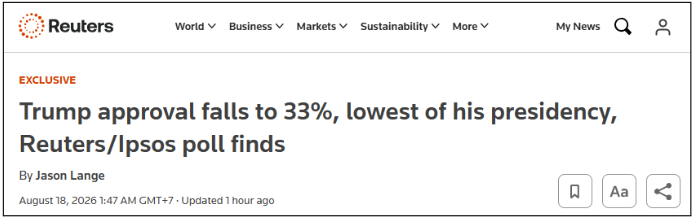
ប្រជាប្រិយភាពរបស់ប្រធានាធិបតី លោក Donald Trump បានធ្លាក់ចុះមកត្រឹម 33% ដែលជាកម្រិតទាបបំផុតក្នុងអាណត្តិបច្ចុប្បន្នរបស់គាត់ ខណៈសង្គ្រាមរវាងសហរដ្ឋអាមេរិក និងអ៊ីរ៉ង់នៅតែបន្ត និងបង្កើនសម្ពាធលើតម្លៃប្រេង និងថ្លៃរស់នៅរបស់ប្រជាជនអាមេរិក។ តាមការស្ទង់មតិ Reuters/Ipsos ចុងក្រោយនេះ មានប្រជាជនអាមេរិកប្រមាណ 80% ជឿថា ការចូលរួមរបស់សហរដ្ឋអាមេរិកក្នុងជម្លោះអ៊ីរ៉ង់នឹងបន្តរយៈពេលយូរ រួមមាន 87% នៃគណបក្សប្រជាធិបតេយ្យ (Democrats) និង 71% នៃគណបក្សសាធារណរដ្ឋ (Republicans)។ ផ្ទុយទៅវិញ មានតែ 16% ប៉ុណ្ណោះដែលរំពឹងថាជម្លោះនេះនឹងបញ្ចប់ក្នុងរយៈពេលពីរបីសប្តាហ៍។
សម្ពាធលើ លោក Trump កាន់តែខ្លាំង ខណៈសង្គ្រាមកំពុងប៉ះពាល់ដល់តម្លៃប្រេង និងថ្លៃសាំង។ Trump បាននិយាយនៅក្នុងការជួបជុំអ្នកគាំទ្រនៅ New York ថា ការចំណាយលើសាំងកើនឡើង “បន្តិចបន្តួច” គឺជាតម្លៃដែលគួរទទួលយក ដើម្បីធានាថា អ៊ីរ៉ង់មិនអាចមានអាវុធនុយក្លេអ៊ែរ។ ទោះជាយ៉ាងណា ការស្ទង់មតិ Reuters/Ipsos បង្ហាញថា មានប្រជាជនអាមេរិកត្រឹមប្រមាណ 1 ក្នុងចំណោម 5 នាក់ ប៉ុណ្ណោះដែលគិតថា សង្គ្រាមនេះមានតម្លៃសមនឹងការចំណាយ ខណៈ Trump ក៏បានប្តូររវាងការគំរាមកំហែងបង្កើនការវាយប្រហារ និងការអះអាងថា កិច្ចព្រមព្រៀងសន្តិភាពអាចនឹងកើតឡើងក្នុងពេលឆាប់ៗ។
បញ្ហានេះមានសារៈសំខាន់ជាពិសេសនៅពេលសហរដ្ឋអាមេរិកកំពុងឈានទៅរក ការបោះឆ្នោតពាក់កណ្តាលអាណត្តិ (Midterm Elections) នៅខែវិច្ឆិកា។ ការស្ទង់មតិចុងក្រោយបង្ហាញថា មានអ្នកបោះឆ្នោត 38% ជឿថា Democrats អាចគ្រប់គ្រងសេដ្ឋកិច្ចបានល្អជាង ខណៈ 35% ជ្រើសរើស Republicans។ គណបក្សប្រជាធិបតេយ្យក៏ទទួលបានការគាំទ្រច្រើនជាងលើបញ្ហា ថ្លៃចំណាយជីវភាពប្រចាំថ្ងៃផងដែរ។ នេះជាការផ្លាស់ប្តូរដ៏សំខាន់ ព្រោះសេដ្ឋកិច្ច និងថ្លៃរស់នៅជាបញ្ហាសំខាន់សម្រាប់អ្នកបោះឆ្នោត ហើយអាចប៉ះពាល់ដល់ការរក្សាអំណាចរបស់គណបក្សសាធារណរដ្ឋក្នុងសភា។
តើការបោះឆ្នោតពាក់កណ្តាលអាណត្តិ (Midterm Elections) អាចមានន័យយ៉ាងណាចំពោះសង្គ្រាមអ៊ីរ៉ង់?
ប្រសិនបើការមិនពេញចិត្តចំពោះ លោក Trump និងសម្ពាធលើថ្លៃរស់នៅបន្តកើនឡើង វាអាចបង្កើន សម្ពាធផ្នែកនយោបាយឱ្យរដ្ឋបាលរបស់លោក Trump ជៀសវាងការបង្កើនភាពតានតឹងផ្នែកយោធា មុនពេលការបោះឆ្នោត។ ការកាត់បន្ថយភាពតានតឹងអាចជួយបន្ថយសម្ពាធលើទីផ្សារប្រេង និងថ្លៃសាំង ដែលជាបញ្ហាដែលកំពុងប៉ះពាល់ដល់ការគាំទ្ររបស់ប្រធានាធិបតី។ ទោះជាយ៉ាងណា Midterm Elections មិនមានន័យថា លោក Trump នឹងបាត់បង់សមត្ថភាពក្នុងការសម្រេចចិត្តផ្នែកយោធាភ្លាមៗទេ ប៉ុន្តែការផ្លាស់ប្តូរតុល្យភាពអំណាចក្នុងសភាអាចធ្វើឱ្យការគាំទ្រផ្នែកនយោបាយ និងការអនុវត្តគោលនយោបាយសង្គ្រាមកាន់តែមានភាពស្មុគស្មាញ។
ប្រសិនបើ Midterm Elections បណ្តាលឱ្យមានតំណាងមកពី Democrats កាន់តែច្រើននៅក្នុងសភា វាអាចបង្កើនកិច្ចខិតខំប្រឹងប្រែងដើម្បីជំរុញការបន្ធូរភាពតានតឹង និងស្វែងរកដំណោះស្រាយការទូតចំពោះជម្លោះអាមេរិក និងអ៊ីរ៉ង់។ ក្នុងពេលជាមួយគ្នា វាក៏អាចកាត់បន្ថយលទ្ធភាពនៃការបង្កើនភាពតានតឹងផ្នែកយោធាបន្ថែមទៀត ដោយសាររដ្ឋបាល របស់លោក Trump និង Republicans អាចប្រឈមនឹងការប្រឆាំងកាន់តែខ្លាំងនៅក្នុងសភា។ ដូច្នេះ លទ្ធផលនៃ Midterm Elections អាចមានឥទ្ធិពលលើទិសដៅនៃគោលនយោបាយអាមេរិកចំពោះអ៊ីរ៉ង់ ដោយការកើនឡើងនៃតំណាងគណបក្សប្រជាធិបតេយ្យអាចជំរុញឱ្យមានការផ្តោតកាន់តែខ្លាំងលើការបន្ធូរភាពតានតឹង ខណៈកាត់បន្ថយលទ្ធភាពនៃការបង្កើនសកម្មភាពយោធា។
សម្រាប់ Gold: ការបន្ធូរភាពតានតឹងអាចជួយបន្ថយតម្លៃប្រេង និងសម្ពាធអតិផរណា ដែលអាចពង្រឹងការរំពឹងទុកអំពីការកាត់បន្ថយអត្រាការប្រាក់ និងជួយគាំទ្រតម្លៃមាស។ ខណៈការបង្កើនភាពតានតឹងអាចជំរុញតម្លៃប្រេង និងអតិផរណា ដែលអាចធ្វើឱ្យ ធនាគារកណ្តាលសហរដ្ឋអាមេរិក (Fed) មាន គោលជំហរតឹងរ៉ឹង (Hawkish) ជាងមុន និងបង្កើតសម្ពាធលើមាសតាមរយៈការរំពឹងទុកអត្រាការប្រាក់ខ្ពស់ជាងមុន។
| English Version |
President Donald Trump’s approval rating has fallen to just 33%, the lowest level of his current presidency, as the war between the United States and Iran continues and puts pressure on oil prices and the cost of living for Americans. According to the latest Reuters/Ipsos poll, around 80% of Americans believe U.S. involvement in the Iran conflict will continue for an extended period, including 87% of Democrats and 71% of Republicans. In contrast, only 16% expect the conflict to end within a few weeks.
Pressure on Trump is increasing as the war continues to affect oil prices and gasoline costs. Trump said at a rally in New York that paying “a tiny little bit more” for gasoline is a price worth paying to ensure that Iran cannot obtain a nuclear weapon. However, the Reuters/Ipsos poll shows that only around 1 in 5 Americans believe the war has been worth the cost, while Trump has also alternated between threats of further military escalation and claims that a peace deal could be reached soon.
This issue is particularly important as the United States approaches the Midterm Elections in November. The latest poll shows that 38% of voters believe Democrats would handle the economy better, compared with 35% who prefer the Republican approach. Democrats are also viewed more favorably on the issue of everyday living costs. This is significant because the economy and cost of living are major concerns for voters and could affect the Republican Party’s ability to maintain its control of Congress.
What Could the Midterm Elections Mean for the Iran Conflict?
If dissatisfaction with Trump and pressure over the cost of living continue to increase, this could create greater political pressure on the Trump administration to avoid further military escalation ahead of the elections. De-escalation could help reduce pressure on oil markets and gasoline prices, which are issues currently affecting the president’s support. However, the Midterm Elections do not mean that Trump would immediately lose his ability to make military decisions. Instead, a shift in the balance of power in Congress could make political support for, and the implementation of, his war policies more difficult.
If the Midterm Elections result in more Democratic representatives entering Congress, this could increase efforts to push for de-escalation and seek a diplomatic solution to the U.S.-Iran conflict. At the same time, it could reduce the likelihood of further military escalation, as the Trump administration and Republicans could face stronger opposition in Congress. Therefore, the outcome of the Midterm Elections could influence the direction of U.S. policy toward Iran, with a larger Democratic presence potentially increasing the focus on de-escalation while reducing the likelihood of further military action.
For Gold: De-escalation could help reduce oil prices and inflationary pressures, which could strengthen expectations for interest-rate cuts and support gold prices. On the other hand, further escalation could push oil prices and inflation higher, potentially leading the Federal Reserve to adopt a more hawkish stance and put pressure on gold through expectations of higher interest rates.