
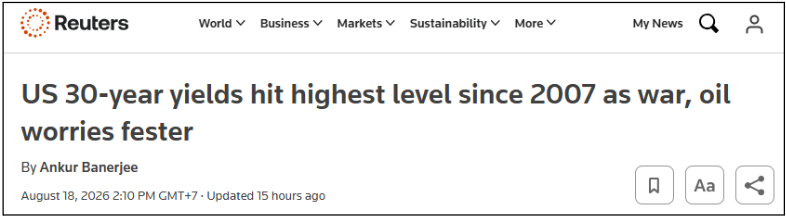
ទីផ្សារមូលបត្របំណុលសកល (Global bond markets) បានរងសម្ពាធកាលពីម្សិលមិញ ខណៈទិន្នផលមូលបត្របំណុលរយៈពេលវែង (long-term government bond yields) នៅសហរដ្ឋអាមេរិក អឺរ៉ុប និងជប៉ុនបានកើនឡើងដល់កម្រិតខ្ពស់ក្នុងរយៈពេលជាច្រើនទសវត្សរ៍។ ទិន្នផលមូលបត្របំណុលរដ្ឋអាមេរិកអាយុ 30 ឆ្នាំ (US 30-year Treasury yield) បានកើនឡើងដល់ 5.34% ដែលជាកម្រិតខ្ពស់បំផុតចាប់តាំងពីឆ្នាំ 2007 ខណៈទិន្នផលមូលបត្របំណុលអាយុ 10 ឆ្នាំ (US 30-year Treasury yield) បានឡើងដល់ 4.75%។ ទន្ទឹមនឹងនេះ ទិន្នផលមូលបត្របំណុលរបស់ជប៉ុន និងអាល្លឺម៉ង់ក៏បានកើនឡើងដល់កម្រិតខ្ពស់ជាច្រើនទសវត្សរ៍ផងដែរ។
ការកើនឡើងនៃទិន្នផលនេះត្រូវបានជំរុញដោយការព្រួយបារម្ភអំពីអតិផរណា ការខ្ចីប្រាក់របស់រដ្ឋាភិបាលកើនឡើង និងភាពមិនច្បាស់លាស់នៃស្ថានភាពភូមិសាស្ត្រនយោបាយ។ ជាពិសេស តម្លៃប្រេង Brent បានកើនឡើងលើស $90 ក្នុងមួយបារ៉ែល ខណៈភាពតានតឹងរវាងសហរដ្ឋអាមេរិក និងអ៊ីរ៉ង់បង្កើនការព្រួយបារម្ភថា ការរំខានដល់ការផ្គត់ផ្គង់ថាមពលអាចបង្កើនសម្ពាធអតិផរណា និងធ្វើឱ្យអត្រាការប្រាក់នៅតែខ្ពស់ក្នុងរយៈពេលយូរ។
សម្រាប់មាស ការកើនឡើងនៃទិន្នផលមូលបត្របំណុលអាចបង្កសម្ពាធ ដោយសារមាសមិនផ្តល់ការប្រាក់ ឬប្រាក់ចំណូលថេរ ខណៈមូលបត្របំណុលផ្តល់ផលចំណេញកាន់តែខ្ពស់។ ដូច្នេះ នៅពេលទិន្នផលកើនឡើង ការចំណាយឱកាស (Opportunity Cost) នៃការកាន់កាប់មាសក៏កើនឡើងផងដែរ។ កាលពីម្សិលមិញ មាសបានធ្លាក់ចុះប្រហែល 1.85% មកនៅជុំវិញ $4,335 ក្នុងមួយអោន ខណៈទីផ្សារទទួលរងសម្ពាធពីការកើនឡើងនៃទិន្នផលមូលបត្របំណុល។
ទោះជាយ៉ាងណា ទិន្នផលមូលបត្របំណុលមិនមែនជាកត្តាអវិជ្ជមានសម្រាប់មាសជានិច្ចទេ។ ប្រសិនបើទិន្នផលកើនឡើងដោយសារការរំពឹងថាអតិផរណានឹងកើនឡើង មាសអាចនៅតែទទួលបានការគាំទ្រពីតួនាទីជាទ្រព្យសកម្មការពារហានិភ័យអតិផរណា។ ដូច្នេះ ទីផ្សារនឹងបន្តផ្តោតលើថា តើការកើនឡើងនៃទិន្នផលបច្ចុប្បន្នបណ្តាលមកពីការរំពឹងអតិផរណា ការរំពឹងអត្រាការប្រាក់ ឬការព្រួយបារម្ភអំពីហិរញ្ញវត្ថុរបស់រដ្ឋាភិបាល។
ថ្ងៃនេះ វិនិយោគិននឹងផ្តោតលើ កំណត់ហេតុកិច្ចប្រជុំ FOMC របស់ធនាគារកណ្តាលសហរដ្ឋអាមេរិក (FOMC Meeting Minutes) ដែលគ្រោងនឹងចេញផ្សាយនៅម៉ោង 1:00 ព្រឹក ថ្ងៃទី 20 ខែសីហា (GMT+7)។ កំណត់ហេតុនេះអាចផ្តល់សញ្ញាបន្ថែមអំពីទស្សនវិស័យរបស់ធនាគារកណ្តាលចំពោះអត្រាការប្រាក់។ ជាមួយគ្នានេះ ចលនានៃតម្លៃប្រេង និងទិន្នផលមូលបត្របំណុលសកល នឹងនៅតែជាកត្តាសំខាន់សម្រាប់ទិសដៅតម្លៃមាស។
| English Version |
Global bond markets came under pressure yesterday as long-term government bond yields across the US, Europe and Japan climbed to multi-year highs. The US 30-year Treasury yield rose to 5.34%, its highest level since 2007, while the 10-year Treasury yield climbed to 4.75%. Meanwhile, Japanese and German government bond yields also reached multi-decade highs.
The rise in yields was driven by concerns over inflation, increased government borrowing and geopolitical uncertainty. In particular, Brent crude rose above $90 per barrel as tensions between the US and Iran raised concerns that disruptions to energy supplies could increase inflationary pressures and keep interest rates elevated for longer.
For gold, rising bond yields can create downward pressure because gold does not generate interest or fixed income, while bonds offer increasingly attractive returns as yields rise. This increases the opportunity cost of holding gold, making the precious metal relatively less attractive to investors. Spot gold fell around 1.85% yesterday to approximately $4,335 per ounce as rising bond yields weighed on the precious metal.
However, rising bond yields are not always negative for gold. If yields rise because investors expect higher inflation, gold may still receive support from its role as a hedge against inflation. Therefore, markets will be watching whether the current rise in yields is primarily driven by expectations for higher inflation, interest rates staying higher for longer, or concerns over government finances.
Today, investors will focus on the Federal Reserve’s FOMC Meeting Minutes that will come out at 1AM (GMT+7) on August 20th, which could provide further clues about the central bank’s interest-rate outlook. At the same time, movements in oil prices and global bond yields will remain important factors for gold’s direction.