
ទិន្នន័យសន្ទស្សន៍ថ្លៃទំនិញប្រើប្រាស់ (CPI) ស្របតាមការរំពឹងទុក ខណៈអតិផរណាស្នូលបង្ហាញសញ្ញាធូរស្រាល

កាលពីយប់មិញ សហរដ្ឋអាមេរិកបានចេញផ្សាយទិន្នន័យសន្ទស្សន៍ថ្លៃទំនិញប្រើប្រាស់ (CPI)។ ទាំងតួលេខ CPI ប្រចាំខែ និងប្រចាំឆ្នាំ សុទ្ធតែស្របតាមការរំពឹងទុករបស់ទីផ្សារ ខណៈដែល Core CPI ប្រចាំខែ ដែលមិនរាប់បញ្ចូលតម្លៃម្ហូបអាហារ និងថាមពលដែលមានភាពប្រែប្រួលខ្ពស់ បានចេញមកទាបជាងការព្យាករបន្តិច។ លទ្ធផលនេះបង្ហាញថា សម្ពាធអតិផរណាមូលដ្ឋានអាចនឹងកំពុងថយចុះបន្តិចម្តងៗ។
ទោះបីជាមានសញ្ញាវិជ្ជមាននេះក៏ដោយ អតិផរណាប្រចាំឆ្នាំនៅតែស្ថិតក្នុងកម្រិតខ្ពស់ 4.2% ដែលលើសគោលដៅអតិផរណា 2% របស់ធនាគារកណ្តាលអាមេរិក (Fed) យ៉ាងច្រើន។ ជាលទ្ធផល ទីផ្សារនៅតែរំពឹងថា Fed នឹងបន្តប្រកាន់ខ្ជាប់នូវគោលនយោបាយរូបិយវត្ថុដោយប្រុងប្រយ័ត្ន។
មាសបន្តធ្លាក់ចុះ ខណៈក្តីបារម្ភអំពីអតិផរណាគាំទ្រការរំពឹងទុកថាអត្រាការប្រាក់នឹងនៅខ្ពស់យូរជាងមុន
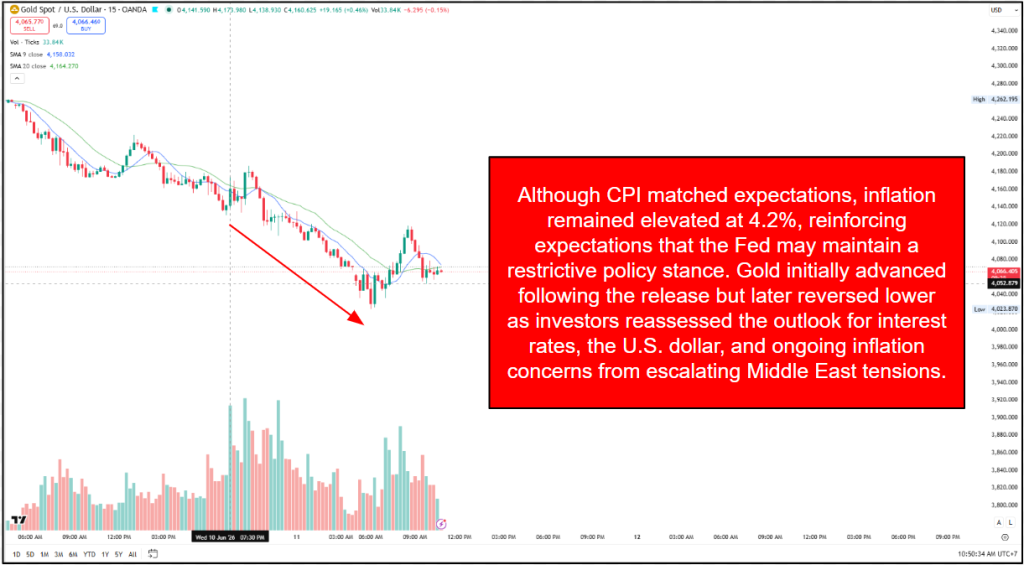
បន្ទាប់ពីការចេញផ្សាយទិន្នន័យ CPI តម្លៃមាសបានកើនឡើងដំបូង ដោយសារវិនិយោគិនមានប្រតិកម្មវិជ្ជមានចំពោះតួលេខ Core CPI ដែលទាបជាងការរំពឹងទុក។ ទោះជាយ៉ាងណា ការកើនឡើងនោះត្រូវបានលុបបំបាត់វិញនៅពេលក្រោយ ខណៈទីផ្សារបានវាយតម្លៃឡើងវិញលើទស្សនវិស័យអតិផរណា និងផលប៉ះពាល់ដែលអាចកើតមានចំពោះគោលនយោបាយរបស់ Fed។
បើទោះបីជាអតិផរណាបានបង្ហាញសញ្ញាធូរស្រាលខ្លះៗក៏ដោយ កម្រិតអតិផរណាបច្ចុប្បន្ននៅតែខ្ពស់ជាងគោលដៅ 2% របស់ Fed។ រួមជាមួយទិន្នន័យទីផ្សារការងារកាលពីសប្តាហ៍មុន ដែលចេញមកល្អប្រសើរជាងការរំពឹងទុក ជាពិសេសរបាយការណ៍ Nonfarm Payrolls សូចនាករសេដ្ឋកិច្ចចុងក្រោយបំផុតបន្តបង្ហាញថា សេដ្ឋកិច្ចអាមេរិកនៅតែមានភាពរឹងមាំ។ ដោយសារហេតុនេះ ទីផ្សារកាន់តែរំពឹងថា Federal Reserve នឹងរក្សាអត្រាការប្រាក់នៅកម្រិតបច្ចុប្បន្នក្នុងកិច្ចប្រជុំគណៈកម្មាធិការទីផ្សារបើកចំហសហព័ន្ធ (FOMC) សប្តាហ៍ក្រោយ ហើយអាចបន្តគោលនយោបាយរូបិយវត្ថុតឹងរ៉ឹងក្នុងរយៈពេលយូរជាងមុន។
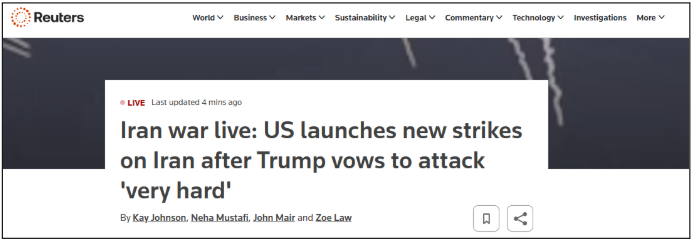
បន្ថែមលើក្តីបារម្ភទាំងនេះ ភាពតានតឹងភូមិសាស្ត្រនយោបាយនៅមជ្ឈិមបូព៌ាបានបន្តកើនឡើងកាលពីយប់មិញ បន្ទាប់ពីសហរដ្ឋអាមេរិកបានបើកការវាយប្រហារថ្មីលើអ៊ីរ៉ង់ ដើម្បីឆ្លើយតបទៅនឹងអ្វីដែលបញ្ជាការកណ្តាលសហរដ្ឋអាមេរិក (U.S. Central Command) បានពិពណ៌នាថាជាសកម្មភាពឈ្លានពានបន្តរបស់អ៊ីរ៉ង់។ ទន្ទឹមនឹងនេះ អ៊ីស្រាអែលក៏បានរាយការណ៍ថាបានរកឃើញការបាញ់គ្រាប់រ៉ុក្កែតចេញពីប្រទេសលីបង់ ដែលបង្ហាញពីហានិភ័យនៃការរីករាលដាលជម្លោះក្នុងតំបន់កាន់តែទូលំទូលាយ។
ទោះបីជាភាពមិនច្បាស់លាស់ផ្នែកភូមិសាស្ត្រនយោបាយជាធម្មតាគាំទ្រតម្រូវការមាសក្នុងនាមជាទ្រព្យសុវត្ថិភាពក៏ដោយ វិនិយោគិនកំពុងផ្តោតកាន់តែខ្លាំងលើផលប៉ះពាល់អតិផរណាដែលអាចកើតឡើងពីជម្លោះអូសបន្លាយ ជាពិសេសប្រសិនបើទីផ្សារថាមពលប្រឈមនឹងការរំខានផ្នែកផ្គត់ផ្គង់។ ការកើនឡើងនៃតម្លៃថាមពលអាចបង្កើនសម្ពាធអតិផរណាបន្ថែមទៀត ដែលជំរុញឱ្យទីផ្សាររំពឹងថា Fed នឹងបន្តរក្សាអត្រាការប្រាក់នៅកម្រិតខ្ពស់ក្នុងរយៈពេលយូរជាងមុន។ កត្តាទាំងនេះហាក់ដូចជាមានឥទ្ធិពលខ្លាំងជាងតួនាទីប្រពៃណីរបស់មាសជាទ្រព្យសុវត្ថិភាព ដែលបានរួមចំណែកដល់ការធ្លាក់ចុះនៃតម្លៃមាសកាលពីម្សិលមិញនេះ។
| English Version |
CPI Data Meets Expectations, Core Inflation Shows Signs of Cooling
Last night, U.S. Consumer Price Index (CPI) data was released. While both headline monthly and annual CPI figures came in line with market expectations, monthly Core CPI, which excludes the more volatile food and energy components, came in slightly below forecasts. This suggests that underlying inflationary pressures may be gradually easing.
Despite this improvement, headline CPI remains elevated at 4.2%, well above the Federal Reserve’s 2% inflation target. As a result, markets continue to expect the Fed to maintain a cautious approach toward monetary policy.
Gold Continues to Fall as Inflation Concerns Support Higher-for-Longer Interest Rate Expectations
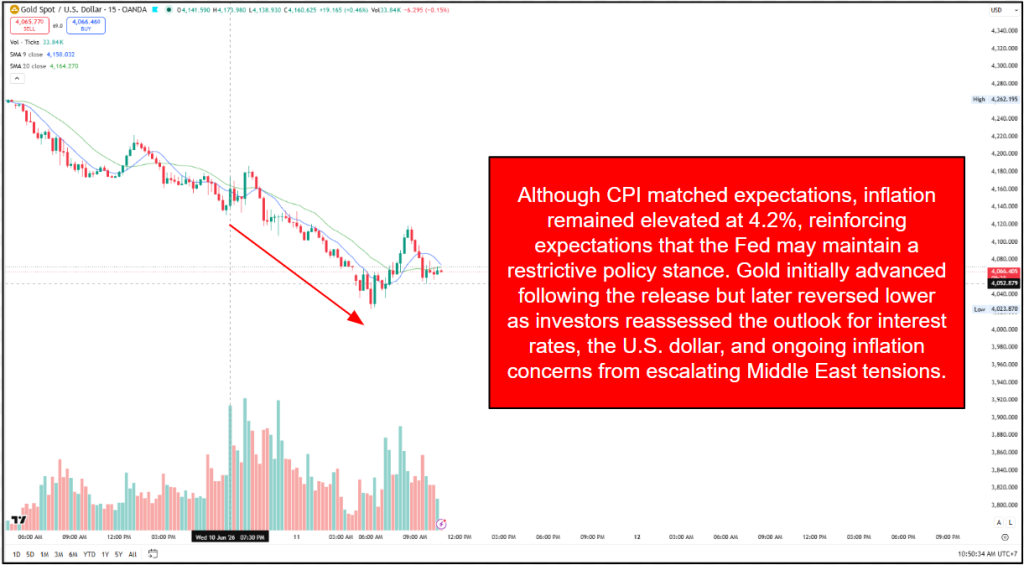
Following the CPI release, gold initially moved higher as investors reacted positively to the softer-than-expected Core CPI reading. However, those gains were later reversed as markets reassessed the broader inflation outlook and the implications for Federal Reserve policy.
While inflation showed some signs of moderation, headline CPI remains elevated at 4.2%, well above the Fed’s 2% target. Combined with last week’s stronger-than-expected labor market data, particularly the Nonfarm Payrolls report, the latest economic indicators continue to suggest that the U.S. economy remains resilient. As a result, markets increasingly expect the Federal Reserve to maintain interest rates at current levels during next week’s FOMC meeting and potentially keep monetary policy restrictive for longer.
Adding to these concerns, geopolitical tensions in the Middle East continued to escalate overnight after the United States launched new strikes on Iran in response to what U.S. Central Command described as continued Iranian aggression. Israel also reported detecting launches from Lebanon, highlighting the risk of a broader regional conflict.
While geopolitical uncertainty typically supports safe-haven demand for gold, investors are increasingly focused on the potential inflationary consequences of a prolonged conflict, particularly if energy markets face supply disruptions. Higher energy prices could add further upward pressure on inflation, reinforcing expectations that the Federal Reserve will maintain a higher-for-longer interest rate stance. This dynamic appears to have outweighed gold’s traditional safe-haven appeal, contributing to the metal’s decline later in the session.