
ភាពតានតឹងនៅមជ្ឈិមបូព៌ាកើនឡើង ខណៈការខិតខំផ្នែកការទូតនៅតែបន្ត
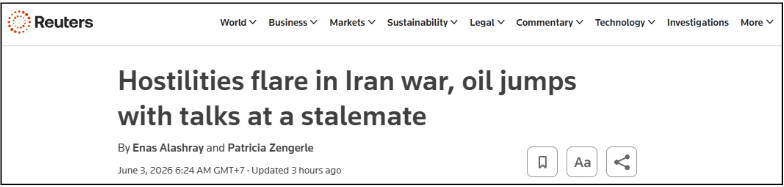
ភាពតានតឹងភូមិសាស្ត្រនយោបាយនៅតំបន់មជ្ឈិមបូព៌ាកើនឡើងកាន់តែខ្លាំងនៅថ្ងៃពុធ ខណៈការប្រយុទ្ធបានផ្ទុះឡើងវិញទូទាំងតំបន់។ កងទ័ពសហរដ្ឋអាមេរិកបានរាយការណ៍ថា ការវាយប្រហារដោយមីស៊ីលពីអ៊ីរ៉ង់ ដែលមានគោលដៅទៅលើបារ៉ែន គុយវ៉ែត និងទីតាំងផ្សេងៗដែលមានមូលដ្ឋានយោធាសហរដ្ឋអាមេរិក ត្រូវបានទប់ស្កាត់ ឬបរាជ័យ។ ការអភិវឌ្ឍទាំងនេះបង្ហាញពីលំនាំនៃការវាយប្រហារដែលបន្តរបស់អ៊ីរ៉ង់នៅតំបន់ឈូងសមុទ្រ ចាប់តាំងពីជម្លោះបានចាប់ផ្តើមនៅចុងខែកុម្ភៈ។
ក្នុងពេលដំណាលគ្នា អ៊ីស្រាអែលបានបន្តការវាយប្រហារលើលីបង់ ទោះបីជាមានការប្រកាសបទឈប់បាញ់ផ្នែកខ្លះ ដែលបានសម្របសម្រួលដោយសហរដ្ឋអាមេរិក នៅដើមសប្ដាហ៍នេះក៏ដោយ។ ការប៉ះទង្គិចចុងក្រោយនេះត្រូវបានចាត់ទុកថា ជាការកើនឡើងភាពតានតឹងធ្ងន់ធ្ងរមួយចាប់តាំងពីបទឈប់បាញ់មានប្រសិទ្ធភាព បង្ហាញពីភាពផុយស្រួយនៃកិច្ចព្រមព្រៀងនេះ។
ទោះបីជាជម្លោះកាន់តែតានតឹង ការទំនាក់ទំនងផ្នែកការទូតនៅតែបន្តដំណើរការ។ ការចរចាររវាងសហរដ្ឋអាមេរិក និងអ៊ីរ៉ង់មិនទាន់បរាជ័យទាំងស្រុងឡើយ ខណៈការពិភាក្សារវាងតំណាងអ៊ីស្រាអែល និងលីបង់កំពុងត្រូវបានអនុវត្តនៅក្រសួងការបរទេសសហរដ្ឋអាមេរិក។
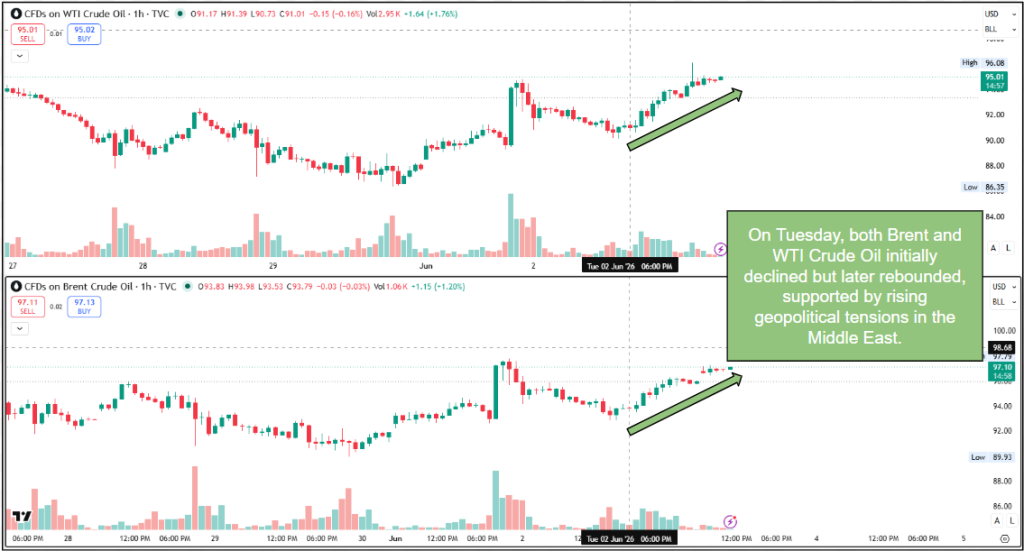
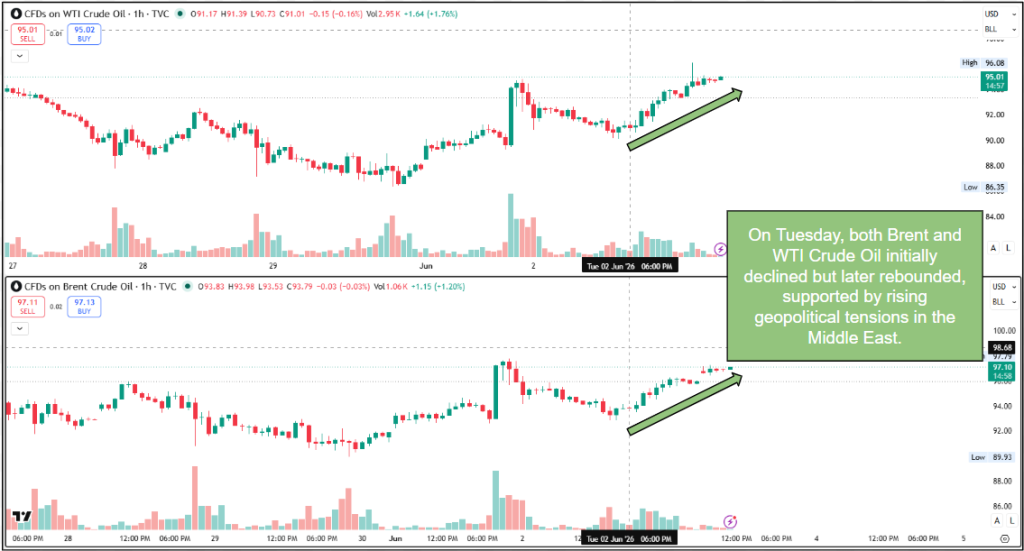
នៅក្នុងទីផ្សារថាមពល តម្លៃប្រេងបានឆ្លុះបញ្ចាំងពីការផ្លាស់ប្តូរនៃបរិបទភូមិសាស្ត្រនយោបាយ។ នៅថ្ងៃអង្គារ តម្លៃប្រេង Brent និង WTI បានធ្លាក់ចុះដំបូង ប៉ុន្តែបន្ទាប់មកបានកើនឡើងវិញ ខណៈភាពតានតឹងកើនឡើងនៅមជ្ឈិមបូព៌ាបានផ្តល់ការគាំទ្រដល់តម្លៃ។
មាសរងសម្ពាធ ខណៈភាពតានតឹងនៅមជ្ឈិមបូព៌ាកើនឡើង និងទិន្នន័យទីផ្សារការងារសហរដ្ឋអាមេរិកខ្លាំង
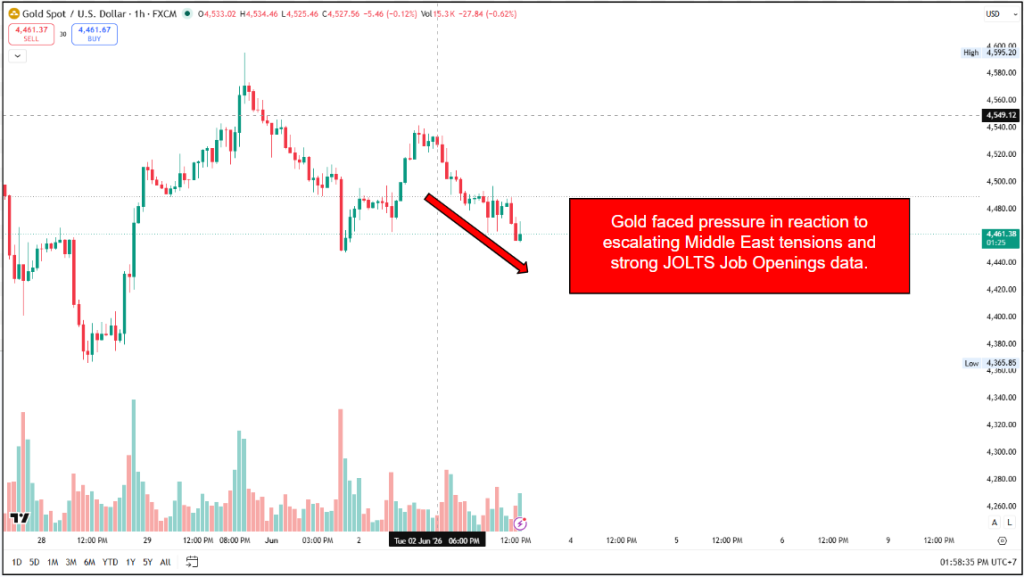
តម្លៃមាសបានធ្លាក់ចុះ ខណៈភាពតានតឹងកើនឡើងនៅមជ្ឈិមបូព៌ាបានប៉ះពាល់ដល់អារម្មណ៍ទីផ្សារយ៉ាងខ្លាំង បណ្តាលឲ្យតម្រូវការទ្រព្យសុវត្ថិភាព (Safe-Haven Asset) ថយចុះក្នុងរយៈពេលខ្លី។ ទោះបីជាធម្មតា ភាពតានតឹងភូមិសាស្ត្រនយោបាយអាចគាំទ្រតម្លៃមាសក៏ដោយ បរិបទបច្ចុប្បន្នបាននាំឲ្យមានអតិផរណា និងអត្រាការប្រាក់ខ្ពស់។ នេះបានកាត់បន្ថយភាពទាក់ទាញរបស់ទ្រព្យសម្បត្តិដែលមិនផ្តល់អត្រាការប្រាក់ ឬទិន្នផលដូចជាមាស ហើយនាំឲ្យមានសម្ពាធលើតម្លៃមាសនៅពេលនេះ។

ក្នុងពេលដំណាលគ្នា ទិន្នន័យ JOLTs Job Openings កាលពីម្សិលមិញបានចេញលទ្ធផលខ្ពស់ជាងការរំពឹងទុក និងលើសទិន្នន័យមុនៗ ដែលបានគាំទ្រកម្លាំងប្រាក់ដុល្លារអាមេរិក។ កម្លាំងប្រាក់ដុល្លារដែលរឹងមាំបានបន្ថែមសម្ពាធលើតម្លៃមាស និងធ្វើឲ្យការធ្លាក់ចុះកាន់តែច្បាស់។
| English Version |
Middle East Tensions Escalate as Diplomatic Efforts Continue
Geopolitical tensions in the Middle East escalated on Wednesday, as hostilities flared across the region. The U.S. military reported that Iranian missile attacks targeting Bahrain, Kuwait, and other locations hosting U.S. bases were either intercepted or failed. These developments highlight a continued pattern of Iranian strikes in the Middle East since the conflict began in late February.
At the same time, Israel has maintained its strikes on Lebanon, despite a U.S.-mediated partial ceasefire announced earlier this week. The latest exchanges mark one of the most serious escalations since the ceasefire took effect, underscoring the fragile nature of the agreement.
Despite the intensifying conflict, diplomatic channels remain active. Talks between the United States and Iran have not fully broken down, while discussions between Israeli and Lebanese representatives are currently taking place at the U.S. State Department.
In energy markets, oil prices reflected the shifting geopolitical landscape. On Tuesday, both Brent and WTI crude initially declined but later rebounded, as rising tensions in the Middle East provided support to prices.
Gold Faces Pressure Amid Rising Middle East Tensions and Strong U.S. Labor Data
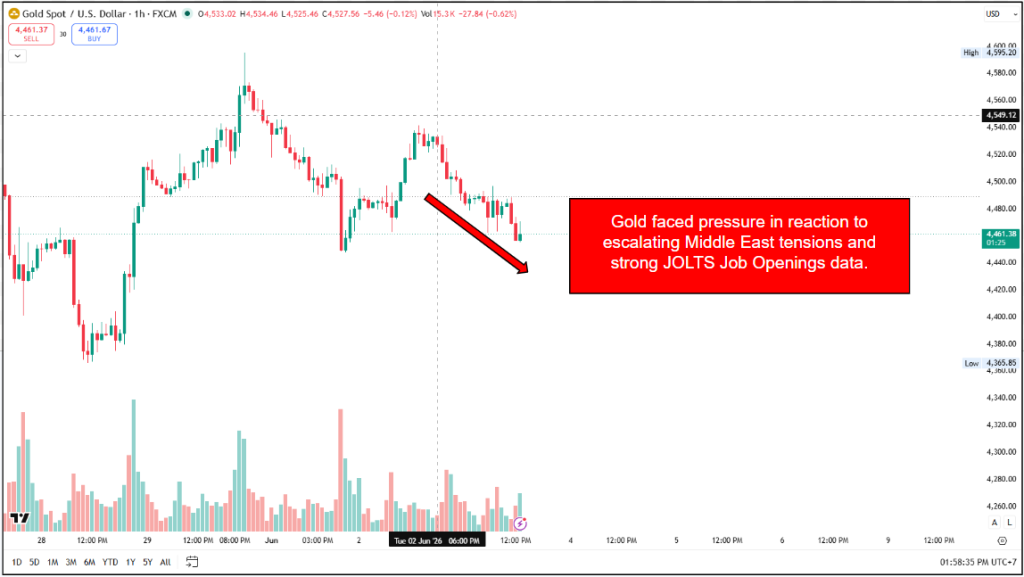
Gold prices moved lower as escalating tensions in the Middle East weighed more heavily on market sentiment, reducing demand for safe-haven assets in the near term. Despite typically supporting gold, the current geopolitical tension is resulting in high inflation and interest rates. This decreases the appeal of non-yielding assets such as gold, resulting in the current pressure on gold prices.
At the same time, yesterday’s JOLTs Job Openings data came in stronger than expected and above previous figures, reinforcing U.S. dollar strength. The firmer dollar added further pressure on gold, amplifying the decline.