កិច្ចព្រមព្រៀងអាមេរិក–អ៊ីរ៉ង់សម្រាប់ពន្យារពេលឈប់បាញ់ កំពុងជិតសម្រេច
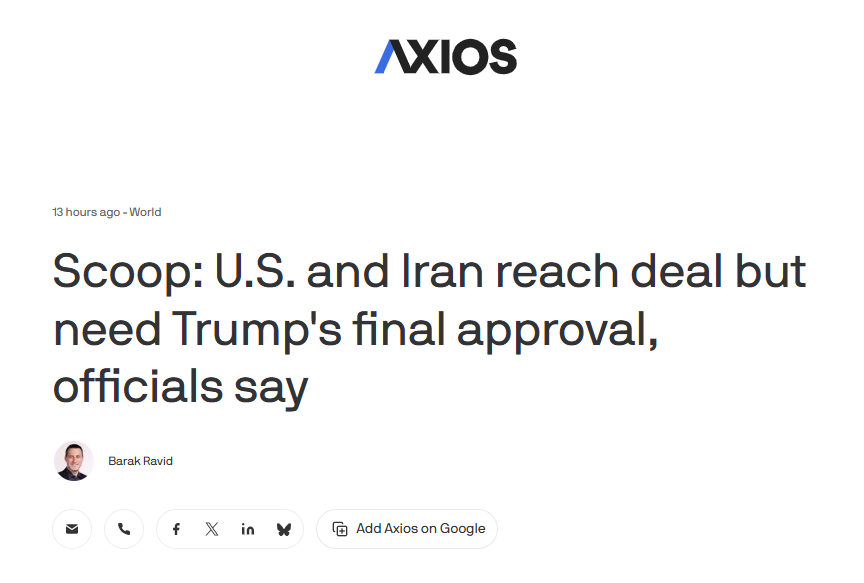
កាលពីថ្ងៃព្រហស្បតិ៍ អនុប្រធានាធិបតីសហរដ្ឋអាមេរិក លោក JD Vance បានឲ្យដឹងថា សហរដ្ឋអាមេរិក និងអ៊ីរ៉ង់ កំពុងជិតសម្រេចលើអនុស្សរណៈយោគយល់ (Memorandum of Understanding) ដែលនឹងពន្យារពេលការឈប់បាញ់បន្ថែម 60 ថ្ងៃ។ ក្របខណ្ឌដែលកំពុងពិភាក្សានេះ ក៏នឹងអនុញ្ញាតឲ្យចរាចរណ៍ដឹកជញ្ជូនតាមសមុទ្រ តាមច្រកសមុទ្រ Hormuz ដំណើរការឡើងវិញផងដែរ។
រយៈពេលពន្យារនេះ នឹងត្រូវប្រើសម្រាប់បន្តការចរចាលើបញ្ហាដែលនៅសេសសល់ ជាពិសេសកម្មវិធីនុយក្លេអ៊ែររបស់អ៊ីរ៉ង់។ ទោះជាយ៉ាងណា កិច្ចព្រមព្រៀងនេះនៅមិនទាន់បានអនុម័តជាផ្លូវការដោយប្រធានាធិបតីអាមេរិក លោក Donald Trump ទេ ខណៈប្រព័ន្ធផ្សព្វផ្សាយរដ្ឋរបស់អ៊ីរ៉ង់ក៏បានរាយការណ៍ថាកិច្ចព្រមព្រៀងនេះនៅមិនទាន់បញ្ចប់ជាផ្លូវការផងដែរ។
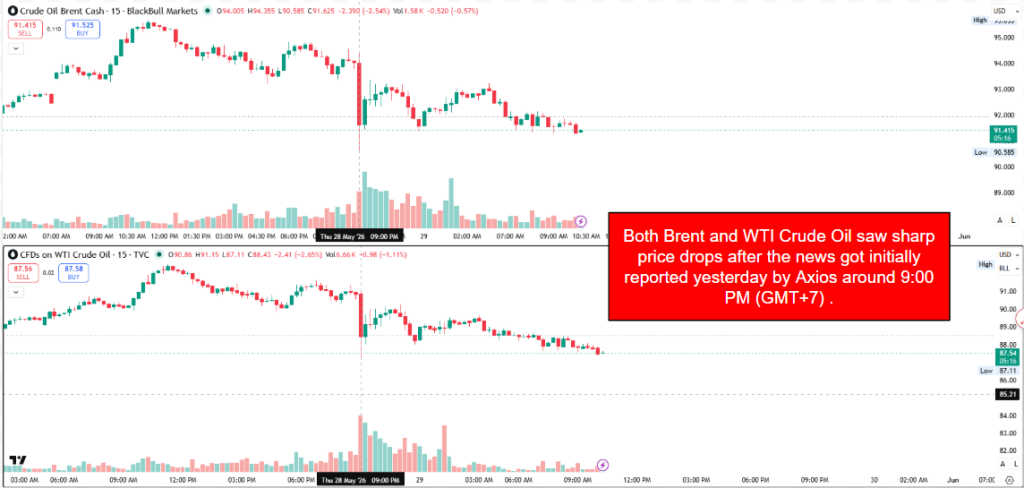
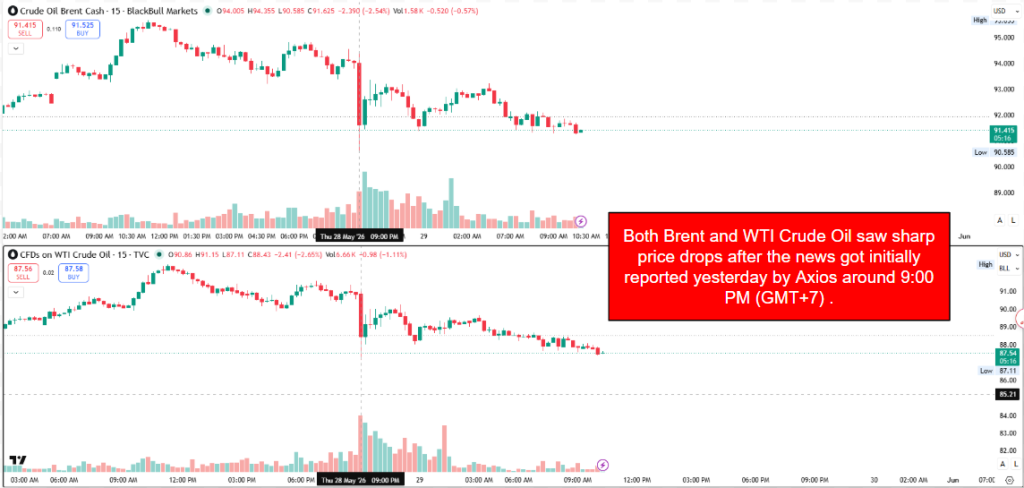
បន្ទាប់ពីព័ត៌មាននេះ តម្លៃប្រេងបានធ្លាក់ចុះ ដោយសារការរំពឹងទុកថាការកាត់បន្ថយហានិភ័យភូមិសាស្ត្រនយោបាយ និងលទ្ធភាពបើកច្រក Hormuz ឡើងវិញ អាចធ្វើឲ្យការព្រួយបារម្ភអំពីការផ្គត់ផ្គង់ថយចុះ។
ទិន្នន័យសេដ្ឋកិច្ចសហរដ្ឋអាមេរិក និងប្រតិកម្មរបស់មាស
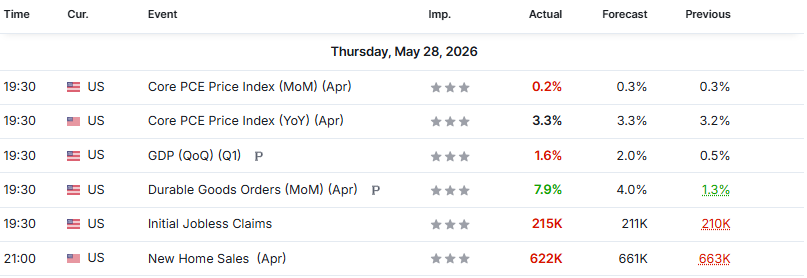
កាលពីម្សិលមិញ មានការចេញផ្សាយទិន្នន័យសេដ្ឋកិច្ចសហរដ្ឋអាមេរិកជាច្រើន។ ក្នុងនោះ សន្ទស្សន៍ចំណាយលើការប្រើប្រាស់ផ្ទាល់ខ្លួនស្នូលប្រចាំខែ (Core PCE Price Index (MoM)), ផលិតផលក្នុងស្រុកសរុបប្រចាំត្រីមាស (GDP (QoQ)) និងទិន្នន័យចំនួនផ្ទះថ្មីដែលបានលក់ (New Home Sales) បានចេញទាបជាងការរំពឹងទុក និងក្នុងករណីខ្លះក៏ទាបជាងរបាយការណ៍មុនផងដែរ។ នេះបង្ហាញថា សន្ទុះសេដ្ឋកិច្ចកំពុងធ្លាក់ចុះ និងសម្ពាធអតិផរណាកំពុងស្រាលចុះទោះបីជាអត្រាអតិផរណានៅតែខ្ពស់ក៏ដោយ។
រីឯទិន្នន័យការទាមទារគ្មានការងារធ្វើដំបូង (Initial Jobless Claims) បានចេញខ្ពស់ជាងការរំពឹងទុក ទោះបីជានៅទាបជាងរបាយការណ៍មុនបន្តិចក៏ដោយ។ សរុបមក ទិន្នន័យទាំងនេះបង្ហាញពីទស្សនវិស័យសេដ្ឋកិច្ចអាមេរិកដែលទន់ខ្សោយជាងមុន ដែលបានធ្វើឲ្យប្រាក់ដុល្លារអាមេរិកចុះថ្លៃ។
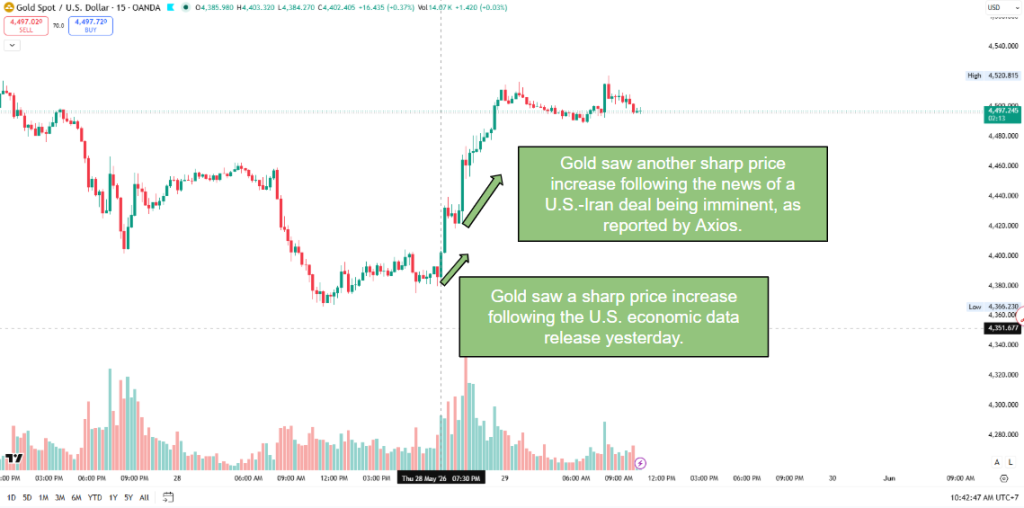
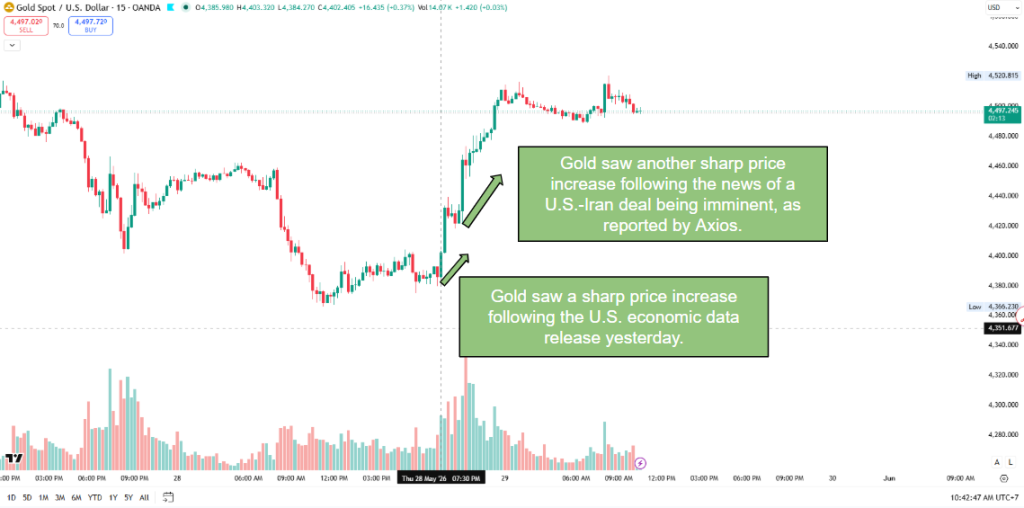
បន្ថែមពីនេះ ព័ត៌មានអំពីវឌ្ឍនភាពនៃកិច្ចព្រមព្រៀងរវាងអាមេរិក និងអ៊ីរ៉ង់ ក៏អាចបានជួយបន្ថែមការរំពឹងទុកថា ហានិភ័យភូមិសាស្ត្រនយោបាយនឹងថយចុះ និងសម្ពាធអតិផរណាបង្កមកពីតម្លៃប្រេងឡើងថ្លៃនឹងស្រាលចុះ។ កត្តាទាំងពីរនេះបានគាំទ្រតម្លៃមាស ដែលបានកើនឡើងស្របតាមការរំពឹងទុកថា ធនាគារកណ្ដាលអាមេរិកអាចមានគោលនយោបាយរក្សាអាត្រាការប្រាក់ថេរនាពេលខាងមុខនេះ។
| English Version |
U.S.-Iran Agreement to Extend Ceasefire Imminent
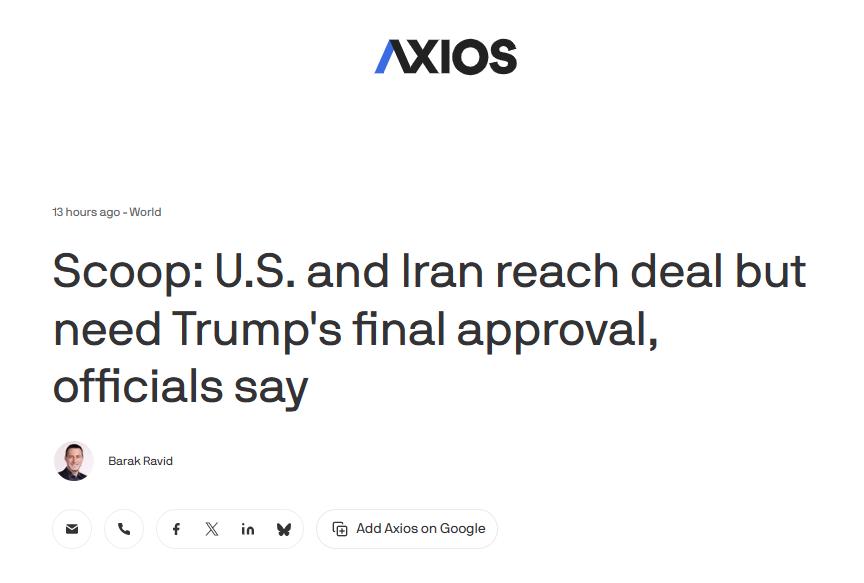
On Thursday, U.S. Vice President JD Vance stated that the United States and Iran are close to reaching a memorandum of understanding that would extend the current ceasefire by another 60 days. The proposed framework would also allow the resumption of maritime traffic through the Strait of Hormuz.
The extension period would be used to continue negotiations on unresolved issues, most notably Iran’s nuclear program. However, the agreement has not yet been formally approved by U.S. President Donald Trump, while Iranian state media has also reported that the deal is still not finalized.
Following the news, oil prices fell sharply, reflecting expectations that reduced geopolitical risk and the potential reopening of the Strait could ease supply concerns.
Yesterday’s U.S. Economic Data Release and Gold’s Reaction
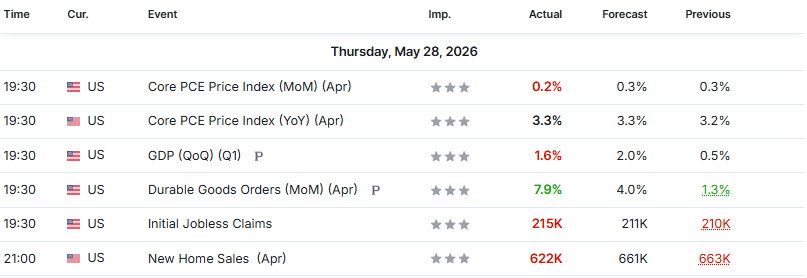
A range of U.S. economic data was released yesterday, with several key indicators coming in weaker than expected. The Core PCE Price Index (MoM), GDP (QoQ), and New Home Sales all printed below consensus estimates, and in some cases also below prior readings. This suggests softer economic momentum and easing inflation pressures.
Initial Jobless Claims came in higher than expected, though still slightly improved compared to the previous reading. Overall, the data combination points to a softer U.S. growth and inflation outlook, which weighed on the U.S. dollar.
In addition, reports of progress toward a U.S.–Iran agreement likely reinforced expectations of reduced geopolitical risk and lower energy-driven inflation pressures. Together, these factors supported gold, which moved higher in response as markets priced in a less aggressive Federal Reserve policy outlook going forward.