
ព័ត៌មានលម្អិតអំពីការរីកចម្រើននៃកិច្ចព្រមព្រៀងរវាងអាមេរិក និងអ៊ីរ៉ង់
មន្រ្តីពីភាគីអ៊ីរ៉ង់ និងសហរដ្ឋអាមេរិកបានបញ្ជាក់ថា មាន ការរីកចម្រើនក្នុងការចរចាដើម្បីឈានទៅរក អនុស្សរណៈយោគយល់គ្នា (MOU) ដែលនឹងធ្វើឱ្យបទឈប់បាញ់បច្ចុប្បន្នក្លាយជាកិច្ចព្រមព្រៀងដែលមានស្ថិរភាពបន្ថែម។ ទោះជាយ៉ាងណា គួរបញ្ជាក់ថាកិច្ចព្រមព្រៀងនេះមិនមែនជាការបញ្ចប់ជម្លោះទាំងស្រុងនោះទេ។ កិច្ចព្រមព្រៀងនេះមានគោលបំណងបញ្ឈប់ការប្រយុទ្ធបច្ចុប្បន្ន ខណៈពេលកំណត់គម្រងយៈពេល 60 ថ្ងៃ ដើម្បីដោះស្រាយបញ្ហាសំខាន់ៗមួយចំនួន រួមមាន៖
- ការបើកឡើងវិញនៃច្រកសមុទ្រ Hormuz
- កម្មវិធីនុយក្លេអ៊ែររបស់អ៊ីរ៉ង់ រួមទាំងស្តុក និងការបង្កើនកម្រិតអ៊ុយរ៉ានីញ៉ូម
- ទ្រព្យសម្បត្តិរបស់អ៊ីរ៉ង់ដែលត្រូវបានបង្កកនៅធនាគារបរទេស
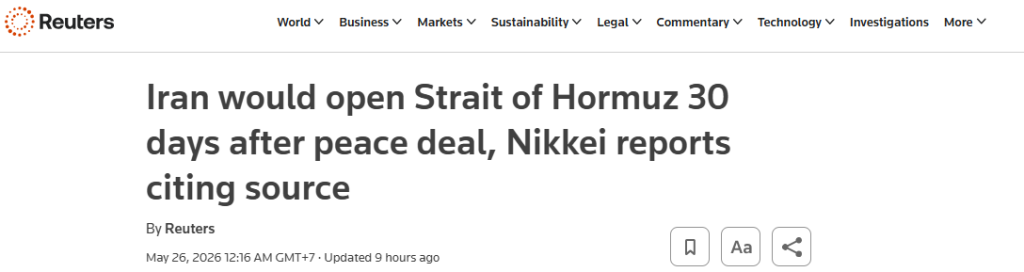
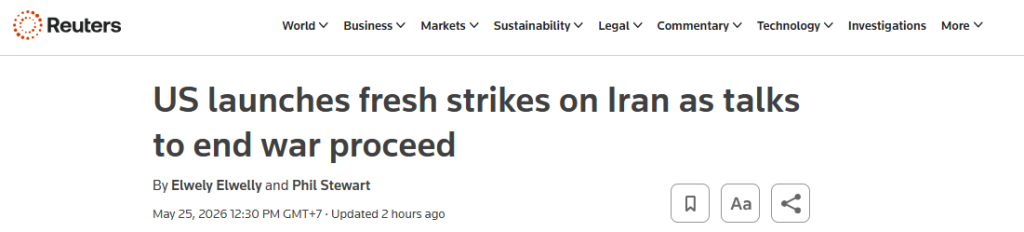
ទោះបីជា MOU អាចជួយបន្ថយភាពតានតឹងភ្លាមៗក៏ដោយ ជំទាស់ត្រង់ចំណុចខាងលើនៅតែមាន ដែលត្រូវការដោះស្រាយក្នុងរយៈពេល 60 ថ្ងៃខាងមុខក្រោយពេលដែល MOU ត្រូវបានចុះហត្ថលេខា។ ភាពតានតឹងនេះត្រូវបានបង្ហាញយ៉ាងច្បាស់តាមរយៈព្រឹត្តិការណ៍ថ្មីៗ ដែលសហរដ្ឋអាមេរិកបានវាយប្រហារលើទូក និងទីតាំងមីស៊ីលរបស់អ៊ីរ៉ង់កាលពីថ្ងៃចន្ទ។ កងកម្លាំង U.S. Central Command បានបញ្ជាក់ថា ការវាយប្រហារនេះមានគោលបំណង “ការពារកងទ័ពរបស់យើងពីការគំរាមកំហែងពីកម្លាំងអ៊ីរ៉ង់” ដែលបង្ហាញពី ភាពផុយស្រួយនៃបទឈប់បាញ់នេះ។
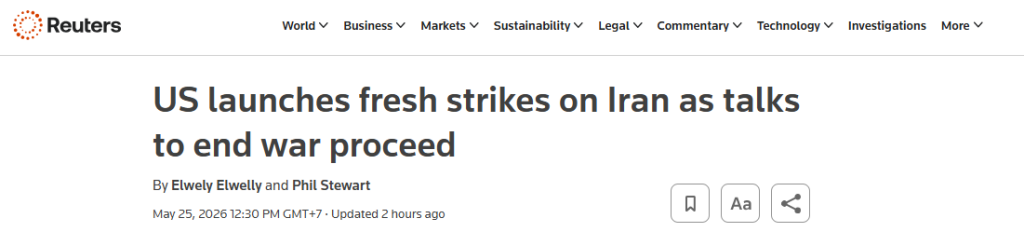
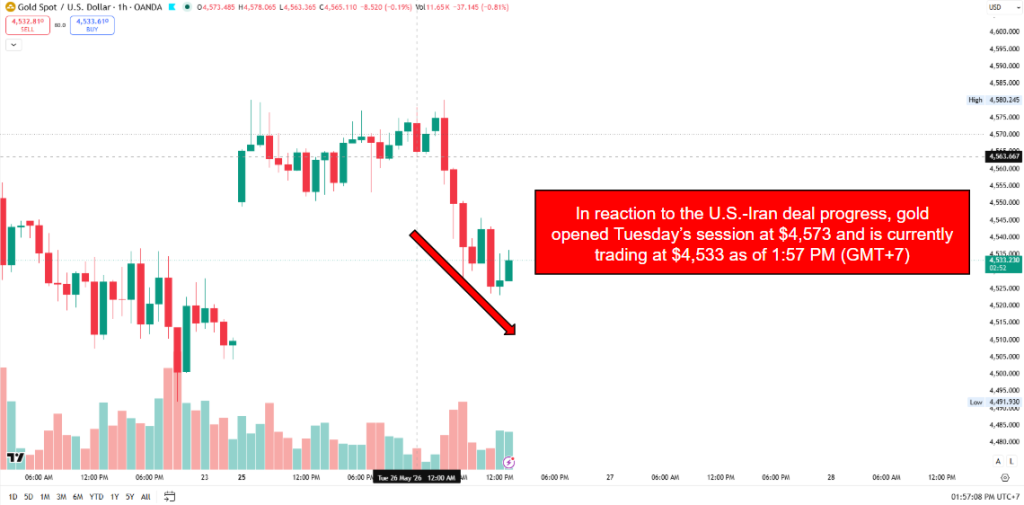
តម្លៃមាសបានបើកនៅ $4,573 ហើយបច្ចុប្បន្នកំពុងជួញដូរនៅ $4,533 (គិតត្រឹមម៉ោង 1:57 PM, GMT+7) ដែលបង្ហាញពីការថយចុះបន្តិច ខណៈអារម្មណ៍វិជ្ជមានពីការបន្ថយភាពតានតឹងបានបន្ថយតម្រូវការទ្រព្យសកម្មសុវត្ថិភាព (safe-haven asset) ។
ប្រតិកម្មតម្លៃប្រេង ខណៈមានក្តីសង្ឃឹមអំពីការបើកច្រក Hormuz
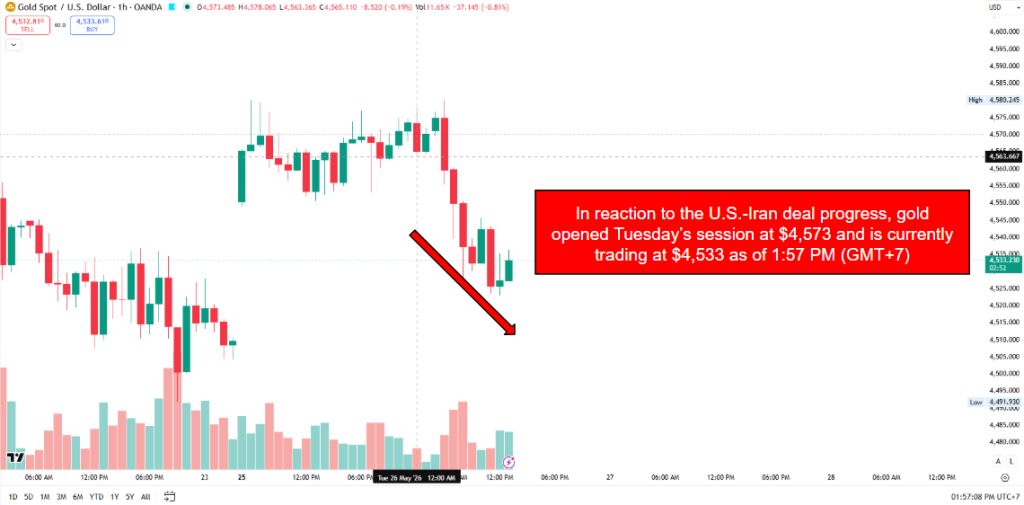
ចំពេលមានការរំពឹងទុកកើនឡើងថាច្រកសមុទ្រ Hormuz អាចបើកឡើងវិញ តម្លៃក៏បានធ្លាក់ចុះដែរ។ ប្រេងឆៅ Brent បានធ្លាក់ចុះក្រោមតម្លៃ $100 ក្នុងមួយធុងក្នុងសប្តាហ៍នេះ ខណៈដែលប្រេងឆៅ WTI ក៏បានធ្លាក់ចុះផងដែរ។
ទោះជាយ៉ាងណា ភាពតានតឹងភូមិសាស្ត្រនយោបាយថ្មីៗ ជាពិសេសការវាយប្រហាររបស់សហរដ្ឋអាមេរិកលើគោលដៅអ៊ីរ៉ង់ បានធ្វើឱ្យ តម្លៃ Brent និង WTI ស្ដារឡើងវិញបន្តិច ដែលបង្ហាញថាទីផ្សារប្រេងនៅតែមានភាពងាយរងឥទ្ធិពលពីព្រឹត្តិការណ៍ភូមិសាស្ត្រនយោបាយ។ មើលទៅមុខ តម្លៃប្រេងមានសក្តានុពលក្នុងការរក្សា ភាពប្រែប្រួលខ្ពស់ ដែលអាស្រ័យលើលទ្ធផលនៃការចរចាររវាងសហរដ្ឋអាមេរិក និងអ៊ីរ៉ង់៖
- ប្រសិនបើមានការបញ្ជាក់ពីការបើកច្រក Hormuz ការផ្គត់ផ្គង់ប្រេងប្រសើរឡើងអាចនាំឱ្យតម្លៃប្រេងធ្លាក់ចុះបន្ថែម។
- ផ្ទុយទៅវិញ ប្រសិនបើការចរចារមិនទៅមុខ ឬការបើកច្រកត្រូវបានពន្យារពេល តម្លៃប្រេងអាចឡើងវិញទៅកម្រិតមុនៗដោយសារការព្រួយបារម្ភអំពីការផ្គត់ផ្គង់។
សរុបមក ទីផ្សារប្រេងកំពុងតែសម្របសម្រួលរវាង ក្តីសង្ឃឹមនៃការបន្ថយភាពតានតឹង និង ហានិភ័យភូមិសាស្ត្រនយោបាយដែលនៅតែមាន ខណៈទិសដៅតម្លៃក្នុងរយៈពេលខ្លី នឹងអាស្រ័យលើការរីកចម្រើននៃការចរចារនៅប៉ុន្មានថ្ងៃខាងមុខនេះរវាងអ៊ីរ៉ង់ និងអាមេរិក។
| English Version |
Details on the Progress of the U.S.-Iran Deal
Both Iranian and U.S. officials have indicated that progress is being made toward a “memorandum of understanding” (MOU), which would formalize the current ceasefire into a more durable arrangement. However, it is important to note that this agreement does not represent a full resolution to the conflict. Instead, it aims to halt ongoing hostilities while establishing a 60-day roadmap to address several key unresolved issues, including:
- The reopening of the Strait of Hormuz
- Iran’s nuclear program, particularly uranium stockpiles and enrichment activities
- Iran’s frozen assets held in overseas banks
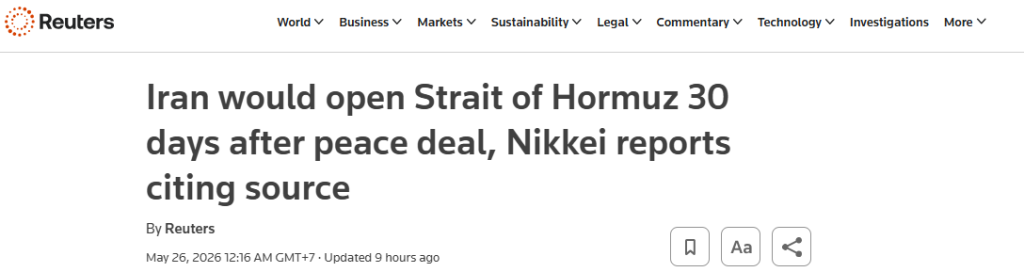
While the MOU could reduce immediate tensions, significant disagreements remain, and it remains to be seen whether the above issues will be resolved within the proposed timeframe. This ongoing friction is evident in recent developments, as the U.S. conducted strikes on Iranian boats and missile sites earlier on Monday. According to U.S. Central Command, these actions were carried out “to protect our troops from threats posed by Iranian forces,” underscoring the fragile nature of the ceasefire.
From a market perspective, this mix of diplomatic progress and continued military activity has kept sentiment cautious. Gold opened today at $4,573 and is currently trading at $4,533 (as of 1:57 PM, GMT+7), reflecting a slight pullback as optimism around de-escalation offsets some safe-haven demand.
Oil Reaction Amid Hopes of Strait Reopening
Amid growing expectations that the Strait of Hormuz may reopen, oil prices have shown signs of easing. Brent crude fell below the $100 per barrel mark this week, while WTI crude also declined.
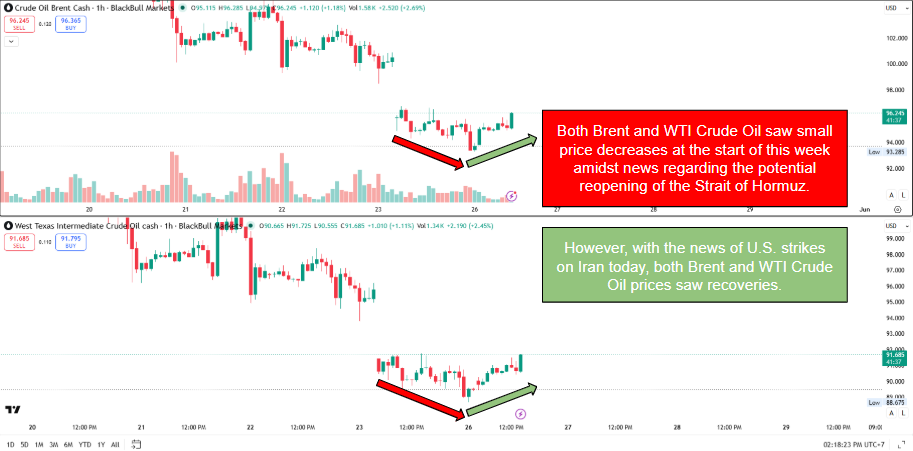
However, renewed geopolitical tensions—particularly the recent U.S. strikes on Iranian targets—have led to modest recoveries in both Brent and WTI, highlighting how sensitive oil markets remain to geopolitical developments. Looking ahead, oil prices are likely to remain highly volatile, driven by the outcome of U.S.–Iran negotiations:
- If the reopening of the Strait of Hormuz is confirmed, improved supply flows could push oil prices lower.
- Conversely, if negotiations stall or the reopening is delayed, prices may rebound toward previous levels due to renewed supply concerns.
Overall, the oil market is currently balancing de-escalation hopes against persistent geopolitical risks, with short-term price direction hinging on the progress of negotiations in the coming days.