
របៀបដែលជម្លោះអាមេរិកនិងអ៊ីរ៉ង់ប៉ះពាល់ដល់ទ្រព្យផ្សេងទៀតក្រៅពីមាស និងប្រេង
យើងដឹងហើយថាជម្លោះរវាងអាមេរិកនិងអ៊ីរ៉ង់បានដើរតួនាទីជាកត្តាមួយយ៉ាងសំខាន់ក្នុងការប្រែប្រួលតម្លៃប្រេង និងក្នុងកម្រិតតិចជាងនោះការប្រែប្រួលនៃតម្លៃមាស។ ទោះជាយ៉ាងណាក៏ដោយ ជម្លោះនេះក៏ចាប់ផ្តើមជះឥទ្ធិពលដល់រូបិយប័ណ្ណអាស៊ីផងដែរ។ តំបន់នេះនាំចូលប្រហែល 80% នៃប្រេងរបស់ខ្លួនតាមច្រកសមុទ្រ hormuz ហើយដោយសារតែច្រកនោះត្រូវបានបិទ តម្លៃប្រេងដែលកំពុងឡើងខ្ពស់បង្ករឱ្យអត្រាប្តូរប្រាក់ធ្លាក់ចុះ និងធ្វើឱ្យធនាគារកណ្តាលត្រូវប្រឈមមុខនឹងការសម្រេចចិត្តដ៏លំបាក។

ឥណ្ឌា អ៊ីនដូណេស៊ី និងហ្វីលីពីន គឺជាប្រទេសដែលរងផលប៉ះពាល់ខ្លាំងបំផុត។ ប្រទេសទាំងបីសុទ្ធតែជានាំចូលប្រេង ហើយកំពុងប្រឈមមុខនឹងលំហូរដើមទុនចេញដោយសារវិនិយោគិនស្វែងរកទ្រព្យសម្បត្តិដែលមានសុវត្ថិភាពជាងនេះ។ រូបិយប័ណ្ណរូពីរបស់ឥណ្ឌាបានធ្លាក់ចុះជិតដល់កម្រិតទាបបំផុតក្នុងប្រវត្តិសាស្ត្រ ក្បែរ 97 រូពីក្នុងមួយដុល្លារ ដោយធនាគារកណ្តាលឥណ្ឌាត្រូវបានរាយការណ៍ថាចំណាយប្រហែល ១ ពាន់លានដុល្លារជារៀងរាល់ថ្ងៃពីរូបិយប័ណ្ណបម្រុងដើម្បីបង្ថយល្បឿននៃការធ្លាក់ចុះ។ អ៊ីនដូណេស៊ីបានប្រកាសដំឡើងអត្រាការប្រាក់ដោយភ្ញាក់ផ្អើល 50 ចំណុចមូលដ្ឋាន (basis points) នៅសប្តាហ៍នេះ ដើម្បីការពាររូបិយប័ណ្ណរូពៀ ដែលក៏បានធ្លាក់ដល់កម្រិតទាបមួយនៅត្រឹម 17,700 ក្នុងមួយដុល្លារ ទោះបីជាអន្តរាគមន៍នោះបរាជ័យបន្តិចក៏ដោយ ដោយសារវិនិយោគិនភ្ញាក់ខ្លាចចំពោះវិធីសាស្ត្ររបស់រដ្ឋាភិបាល។ ហ្វីលីពីនបានដំឡើងអត្រាការប្រាក់រួចហើយ ហើយទីផ្សារកំពុងគណនាលទ្ធភាពនៃការដំឡើងម្តងទៀត មុនកិច្ចប្រជុំដែលមានកំណត់ពេលបន្ទាប់។ បញ្ហាដែលប្រទេសទាំងបីប្រឈមមុខគឺដូចគ្នា៖ ការដំឡើងអត្រាការប្រាក់ជួយការពាររូបិយប័ណ្ណ ប៉ុន្តែក៏ធ្វើឱ្យការរីកចម្រើនសេដ្ឋកិច្ចយឺតថែមទៀត ដែលបង្កឡើងដោយតម្លៃប្រេងថ្លៃស្រាប់។
គូរូបិយប័ណ្ណ USD/JPY៖ ការតាមដានកម្រិត 160
ស្ថានភាពរបស់ជប៉ុនខុសប្លែកពីប្រទេសទាំងបីដែលបានរៀបរាប់ខាងលើបន្តិច។ ភាពទន់ខ្សោយនៃយ៉េនត្រូវបានជំរុញជាចម្បងដោយភាពខុសគ្នារវាងអត្រាការប្រាក់អាមេរិក និងជប៉ុន ដោយតម្លៃប្រេងដែលកំពុងឡើងខ្ពស់បន្ថែមភាពចំណាយលើការនាំចូល។ គូរូបិយប័ណ្ណ USD/JPY កំពុងជំរុញឆ្ពោះទៅកម្រិត 160 ដែលជាកម្រិតដែលធ្លាប់បង្កឱ្យធនាគារកណ្តាលជប៉ុន (Bank of Japan) ធ្វើអន្តរាគមន៍ ដែលបានកើតឡើងម្តងហើយនៅប្រហែលថ្ងៃទី 30 ខែមេសា។ ទោះជាយ៉ាងណាក៏ដោយ គូប្តូររូបិយប័ណ្ណនេះបានឡើងវិញ ហើយកំពុងជិតដល់កម្រិត 160 ម្តងទៀត។
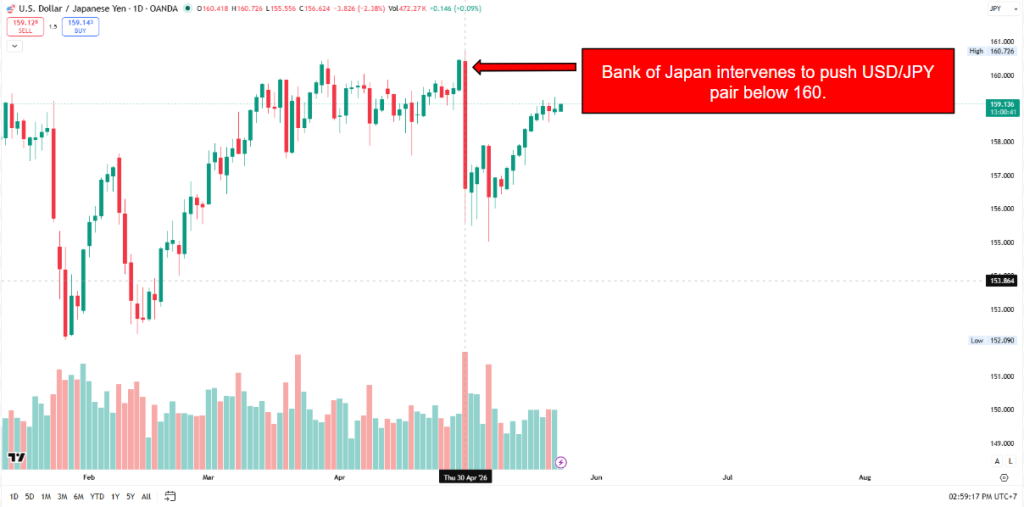
បញ្ហាសម្រាប់ជប៉ុនគឺថា ការអន្តរាគមន៍តែម្នាក់ឯងមិនអាចដោះស្រាយបញ្ហាជាមូលដ្ឋានបានទេ។ ដរាបណាអត្រាការប្រាក់អាមេរិកនៅខ្ពស់ជាងអត្រាការប្រាក់ជប៉ុន ការលើកទឹកចិត្តលក់យ៉េននៅតែបន្ត ហើយការធ្លាក់ចុះណាមួយដែលបង្កឡើងដោយការអន្តរាគមន៍ ជាទូទៅតែងតែត្រូវបានទិញត្រឡប់មកវិញយ៉ាងឆាប់រហ័ស។
រហូតដល់មានដំណោះស្រាយដ៏គួរឱ្យទុកចិត្តចំពោះជម្លោះរវាងអាមេរិកនិងអ៊ីរ៉ង់ ហើយតម្លៃប្រេងបន្ធូរបន្ថយ សម្ពាធលើរូបិយប័ណ្ណអាស៊ីនឹងមិនអាចងាយរលាយបាត់ទៅទេ។
ទិន្នន័យសេដ្ឋកិច្ចអាមេរិក៖ កំណត់ហេតុប្រជុំ FOMC (FOMC Meeting Minutes), សន្ទស្សន៍អ្នកគ្រប់គ្រងការទិញ (PMI), ការទាមទារជំនួយគ្មានការងារដំបូង (Initial Jobless Claims)
ម្សិលមិញបាននាំមកនូវកំណត់ហេតុប្រជុំ FOMC (FOMC Meeting Minutes) ការទាមទារជំនួយគ្មានការងារដំបូង (Initial Jobless Claims) និងសន្ទស្សន៍អ្នកគ្រប់គ្រងការទិញ (PMI) របស់ S&P Global។ កំណត់ហេតុប្រជុំ FOMC មិនមានអ្វីគួរឱ្យភ្ញាក់ផ្អើលទេ គ្រាន់តែបញ្ជាក់ពីអ្វីដែលទីផ្សារដឹងរួចមកហើយ៖ ធនាគារកណ្តាលអាមេរិករក្សាអត្រាការប្រាក់ដដែល ខណៈបន្សល់ទ្វារចំហសម្រាប់ការដំឡើង បើអតិផរណានៅតែបន្ត។ ទាំងការទាមទារជំនួយគ្មានការងារដំបូង (Initial Jobless Claims) និងសន្ទស្សន៍អ្នកគ្រប់គ្រងការទិញ (PMI) សុទ្ធតែស្ថិតជិតនឹងលេខទិន្នន័យលើខមុន ហើយស្ទើរតែស្របជាមួយការព្យាករណ៍។ សរុបមក ទីផ្សារមានប្រតិកម្មតិចតួចចំពោះទិន្នន័យទាំងនោះ។
| English Version |
How the U.S.-Iran Conflict Affects Other Assets Besides Gold and Oil
We already know the U.S.-Iran conflict has played a major role in oil prices and, to a lesser extent, gold. However, the conflict is also starting to weigh on Asian currencies. The region imports around 80% of its oil through the Strait of Hormuz, and with that route shut down, rising fuel costs are feeding into weaker exchange rates and some very difficult decisions for central banks.

India, Indonesia, and the Philippines are feeling it most. All three are oil importers experiencing capital outflows as investors seek safer ground. India’s rupee is near record lows close to 97 per dollar, with the central bank reportedly spending $1 billion a day in reserves just to slow the decline. Indonesia announced a surprise 50 basis point rate hike this week to defend the rupiah, which has also hit record lows at 17,700 against the dollar — though the move backfired somewhat, with investors spooked by the government’s interventionist approach. The Philippines has already raised rates, and markets are pricing in the possibility of another hike before the next scheduled meeting. The bind all three face is the same: raising rates helps defend the currency, but further slows an economy already squeezed by expensive fuel.
USD/JPY: Watching 160
Japan’s situation is different. The yen’s weakness is driven primarily by the gap between U.S. and Japanese interest rates, with rising oil prices adding to import costs. USD/JPY has been pushing toward 160 — a level that has historically triggered Bank of Japan intervention, which already happened once around April 30th. Despite that, the pair has been climbing back up and is once again approaching the 160 level.
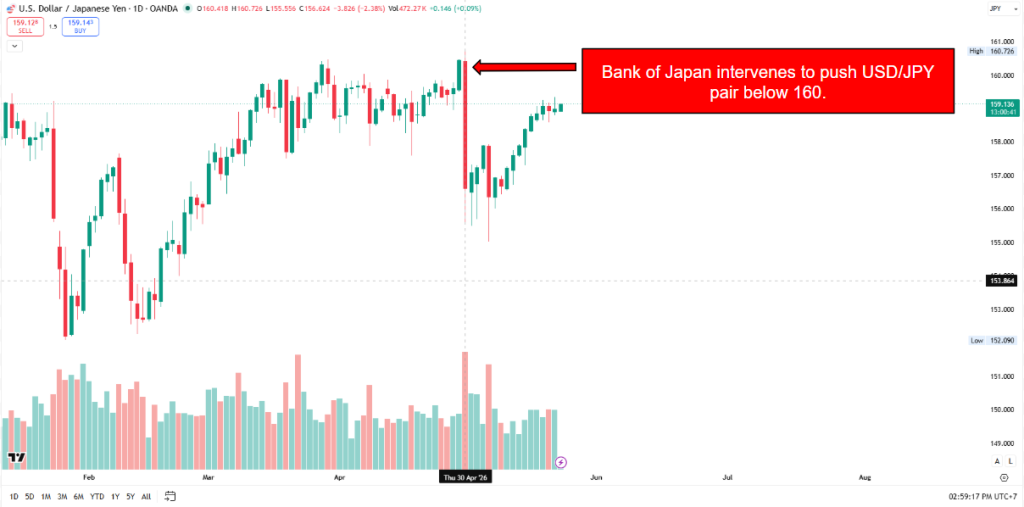
The problem for Japan is that intervention alone doesn’t fix the underlying issue. As long as U.S. rates stay higher than Japanese rates, the incentive to sell yen remains, and any intervention-driven dip tends to get bought back quickly.
Until there’s a credible resolution to the Iran conflict and oil prices ease, the pressure on Asian currencies isn’t going away.
Economic Data: FOMC Meeting Minutes, PMI, Initial Jobless Claims


Yesterday’s session brought the FOMC Meeting Minutes, Initial Jobless Claims, and the S&P Global Purchasing Managers’ Index (PMI). The FOMC Minutes were not surprising, simply confirming what markets already knew: the Fed kept rates unchanged, while leaving the door open to hikes if inflation persists. Both Initial Jobless Claims and the PMI came in close to previous figures and roughly in line with forecasts. Overall, markets showed little reaction to the releases.